
Showing posts with label Indian Jewellery. Show all posts
Showing posts with label Indian Jewellery. Show all posts
Tuesday, January 22, 2013


Friday, January 18, 2013
Maxx Unveils Exclusive Range of Designer Wedding Dresses at high street prices
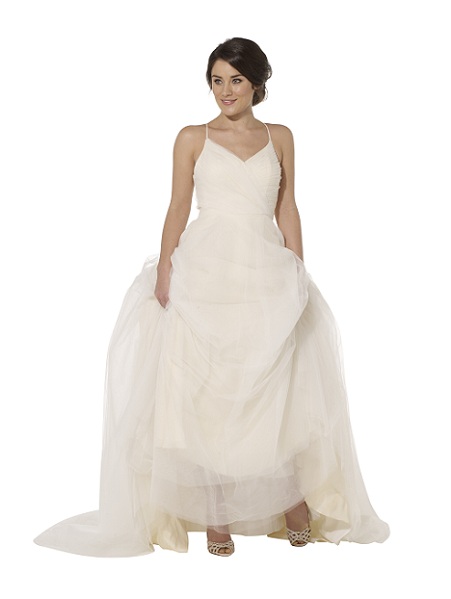

Exciting news ladies; Maxx – a great a place to find a designer bargain – has today, 15 January 2013, unveiled a new exclusive range of designer bridal gowns at high street prices.
This means that cost conscious brides no longer have to lie, cheat and (we hope not) steal to get the designer dress they’d love. Maxx buyers scoured the globe for designer dresses worth as much as £1,395 and made them available to you for £199.99.
Evelyn Morton from Maxx said: “Your wedding day is one of the most important days of your life and one where you want to look and feel stunning! Most brides have dreamt of their wedding dress since they were young girls but with the tough economic climate that dream dress is far out of reach. We’re really excited that we are helping savvy brides get their dream designer wedding dress without the hefty price tag.”
Wednesday, January 16, 2013

Monday, January 14, 2013

Sunday, January 13, 2013

Monday, January 7, 2013


Thursday, January 3, 2013

Tuesday, January 1, 2013
Beautiful Shoe

Many early natives in North America wore a similar type of footwear known as the moccasin. These are tight-fitting, soft-soled shoes typically made out of leather or bison hides.
Many moccasins were also decorated with various beads and other adornments. Moccasins were not designed to get wet, and in wet weather and warm summer months, most Native Americans went barefootAs civilizations began to develop, thong sandals (the precursors of the modern flip-flop) were worn. This practice dates back to pictures of them in ancient Egyptian murals from 4,000 B.C. One pair found in Europe was made of papyrus leaves and dated to be approximately 1,500 years old. They were also worn in Jerusalem during the time of Jesus Christ.Thong sandals were worn by many civilizations and made from a wide variety of materials. Ancient Egyptian sandals were made from papyrus and palm leaves. The Masai of Africa made them out of rawhide. In India, they were made from wood. In China and Japan, rice straw was used. The leaves of the sisal plant were used to make twine for sandals in South America, while the natives of Mexico used the Yucca plant.
Monday, December 31, 2012


Sunday, December 30, 2012

Saturday, December 29, 2012
Flower Tattoo Designs for Girls

Tattoos
During the latter decades of the 20th century tattooing became a popular social practice worldwide.
Many younger (and some older) people today either have aspirations to have a tattoo somewhere on their body, or already have one or more. Some elect for one or several small tattoos such as butterflies, flowers, or other designs, while others may have significant portions of their skin covered. Popular along these lines are the 'half-sleeve', having the upper arm covered in tattoos, or 'full-sleeve', which includes the upper and lower arms. Whether or not to get a tattoo which is visible while wearing clothing is a matter of taste, but also involves consideration of future employment opportunities, and societal and family pressures.
It is assumed that the majority of tattoo recipients patronize tattoo parlors, which- according to varying state laws- have been registered and observe accepted standards of hygiene. However, some individuals do not, and some even use home tattooing equipment.
Thursday, December 27, 2012
Flowers Tattoo

Tattooing spread among the upper classes all over Europe in the 19th century, but particularly in Britain where it was estimated in Harmsworth Magazine in 1898 that as many as one in five members of the gentry were tattooed.
There, it was not uncommon for members of the social elite to gather in the drawing rooms and libraries of the great country estate homes after dinner and partially disrobe in order to show off their tattoos. Aside from her consort Prince Albert, there are persistent rumours that Queen Victoria had a small tattoo in an undisclosed 'intimate' location; Denmark's King Frederick was filmed showing his tattoos taken as a young sailor. Winston Churchill's mother, Lady Randolph Churchill, had a tattoo of a snake around her wrist, which she covered when the need arose with a specially crafted diamond bracelet. Carrying on the family tradition, Winston Churchill had an anchor tattooed on his forearm.
Tribal Flower Tattoo

Tattoos
During the latter decades of the 20th century tattooing became a popular social practice worldwide.
Many younger (and some older) people today either have aspirations to have a tattoo somewhere on their body, or already have one or more. Some elect for one or several small tattoos such as butterflies, flowers, or other designs, while others may have significant portions of their skin covered. Popular along these lines are the 'half-sleeve', having the upper arm covered in tattoos, or 'full-sleeve', which includes the upper and lower arms. Whether or not to get a tattoo which is visible while wearing clothing is a matter of taste, but also involves consideration of future employment opportunities, and societal and family pressures.
It is assumed that the majority of tattoo recipients patronize tattoo parlors, which- according to varying state laws- have been registered and observe accepted standards of hygiene. However, some individuals do not, and some even use home tattooing equipment.
Wednesday, December 26, 2012



Tuesday, December 25, 2012


Monday, December 24, 2012
Shaded Pink Pure Chiffon Straight Kali Kameez

Shalwar qameez (also spelled shalwar kameez or salwar kameez) is a traditional dress worn by both women and men in South Asia and Central Asia. Shalwar or salwar are loose pajama-like trousers.
The legs are wide at the top, and narrow at the ankle. The kameez is a long shirt or tunic. The side seams (known as the chaak), left open below the waist-line, give the wearer greater freedom of movement. It is notably known for being the national dress of Pakistan.Shalwar are gathered at the waist and held up by a drawstring or an elastic band. The pants can be wide and baggy or more narrow, and even made of fabric cut on the bias.
Tuesday, December 18, 2012
Beautiful Nail Designs 2012


 |
| Add caption |
 |
| Add caption |
 |
| Add caption |
 |
| Add caption |
 |
| Add caption |
 |
| Add caption |
 |
| Add caption |
 |
| Add caption |
 |
| Add caption |
 |
| Add caption |
 |
| Add caption |
 |
| Add caption |
 |
| Add caption |
Nail Designs
Pakistantrend a number of gorgeous Nail Designs have been highlighted for girls and women. In this article, we are giving out some of the pictures of newest Nail Designs 2012-13 for girls. As the designs are plain so it can also be the suitable most choice for the wedding seasons, Prom nights, senior annual dinners, welcome parties and formal parties as well that would exceptionally looks stunning.
These tremendous nail art patterns and styles gives you pretty and romantic looks. Adorned nail decoration is usually made of glitters, colorful net lace styles, shiny stones, crystals, newspaper art, cartoon shapes, fruits shapes and floral patters which gives them a elegant and attractive looks.
History
By the turn of the 19th century, nails were tinted with scented red oils, and polished or buffed with a chamois cloth, rather than simply polished.In the 19th and early 20th centuries, people pursued a polished rather than painted look by massaging tinted powders and creams into their nails, then buffing them shiny. One such polishing product sold around this time was Graf's Hyglo nail polish paste. Some people during this period painted their nails with an air brush. After the creation of automobile paint, Cutex produced the first modern nail polishes in 1917 with the introduction of colored nail glosses.
Nail polish originated in China. It started off being made from a combination of beeswax, egg whites, gelatin, vegetable dyes, and gum arabic. Egyptians used orange henna. The orange henna would stain their fingernails. Back in the 1300 BC, the color of the nail polish symbolized the ranking of social class each individual earned. The colors gold and silver were considered to be the royal colors; however, were later changes to black and red.
Once nail polish was refined, it was often used in the place of gloves to cover up the grime underneath the nails.
Colored nail polish was also considered at one time self-mutilation by psychiatrists and unhealthy. Despite this, the first lady to wear solid colors was Eleanor Roosevelt
Today’s nail polish is simply a refined version of the paint on vehicles. It is now used to make people look beautiful by not easily cracking or flaking with the natural movement of the nail.[6] Most nail polishes are made of nitrocellulose dissolved in a solvent (e.g. butyl acetate or ethyl acetate) and either left clear or colored with various pigments. Nail polish was never intended to be used as a bomb, however, it could be due to nitrocellulose. Nitrocellulose is highly flammable. It is also called ‘flash paper’, or when intended to cause a flame, ‘guncotton.’Basic components included are: film forming agents, resins and plasticizers, solvents, and coloring agents. Adhesive polymers (e.g. tosylamide-formaldehyde resin) ensure that the nitrocellulose adheres to the nail's surface. Plasticizers (e.g. camphor) are chemicals that link between polymer chains, spacing them to make the film sufficiently flexible after drying. Pigments and sparkling particles (e.g. mica) add desired color and reflecting characteristics. Scientist M toed added that, “Coloring may also be attributable to the presence of chemicals such as chromium oxide greens, chromium hydroxide, ferric ferrocyanide, ferric ammonium ferrocyanide, stannic oxide, titanium dioxide, iron oxide, carmine, ultramarines, and manganese violet.” In order to get that glittery/shimmer look in the color, mica, bismuth oxychloride, natural pearls, and aluminum powder is added into the ingredients of the nail polish.[8] Thickening agents (e.g. stearalkonium hectorite) are added to maintain the sparkling particles in suspension while in the bottle. Ultraviolet stabilizers (e.g. benozophenone-1) resist color changes when the dry film is exposed to direct sunlight.
Nail polish ingredients often include toluene. Solvents such as toluene and xylene are petroleum-based products that have been linked to cancer. Formaldehyde (formalin) may cause allergic reactions and is unsafe for use by asthmatic people. It is a carcinogen.
Nail polish makers are under pressure to reduce or eliminate toxic ingredients, including phthalates, toluene, and formaldehyde. In September 2006, several makers agreed to phase out dibutyl phthalate, which has been linked to testicular problems in lab animals and humans, in updated formulations.Some makers eliminated formaldehyde from their products, others still use it.
Studies performed on female rats discovered that DBP, also known as phthalates, have been causing birth defects. It was soon removed from the ingredients of nail polish. However, what the scientists failed to realize is that what holds true to rats does not always hold true to humans. "The amount of chemicals used in animal studies is probably a couple of hundred times higher than what you'd be exposed to from using nail polish every week or so," says Paul Foster, PhD, a senior fellow at the National Institute of Environmental Health Sciences, a division of the U.S. Department of Health and Human Services. "So the chance of any individual phthalate producing such harm is very slim.
Water-based nail polish is based on an acrylic polymer emulsion (e.g. styrene-acrylate copolymer), and pigments similar to those used in watercolor paints.[citation needed] This is marketed as an environmentally-conscious product, since nail polish is considered a hazardous waste by some regulatory bodies such as the Los Angeles Department of Public Works). In this application, the solvent (water) does not completely evaporate as in the case of the traditional nail polish; part of the water is absorbed through the fingernail.
Monday, December 17, 2012
New Mehndi dress

Mehndi dress
Take Assistance
Applying mehendi yourselves could be messy. So you better take someone's assistance. Put a towel on your shoulders. Ask your aid to wear plastic gloves. It will keep her clean.
After Applying
Cover your hair in saran wrap or a shower cap. Wait for a few hours. Then wash your hair with cold water and a good conditioner. This will make your hair glow.
Keep Away From Synthetic Products
When you are through with mehendi, you must avoid any chemical processing and products, such as chemically straightening them or perming or putting dye in your hair. This could damage the hair.
Tips
Avoid wearing light colored clothes while applying mehendi, as it could spoil your clothes.
Don't using mehendi on perm hair because mehendi coating does not allow perm to work well on hair.
Never use synthetic products on your hair for it could be harmful for them.
Mehendi in Tradition
In India, mehendi is a way for a bride and groom to get ready for the marriage. Traditions underlie the use of Mehandi, including wedding games and legends. A dark mehandi design for both bride and groom signifies that the two will have a strong relationship. Now Indian marriage is possible sans mehendi. Fashion-centric ladies even wear dresses to match their mehendi. Mehendi is considered the symbol of fertility and prosperity.
Subscribe to:
Posts (Atom)